

© The Paul and Suzanne Jenkins Foundation
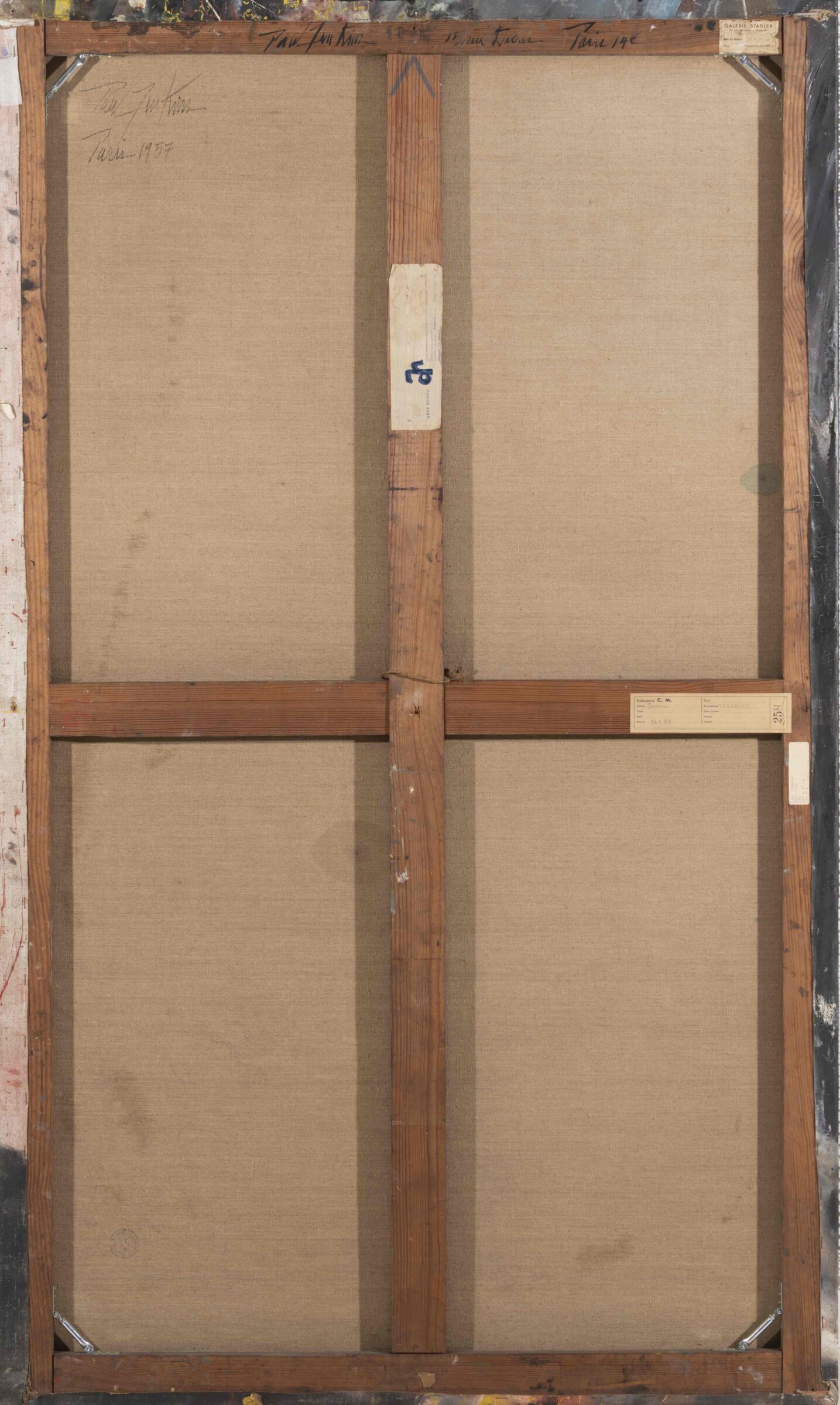
© The Paul and Suzanne Jenkins Foundation
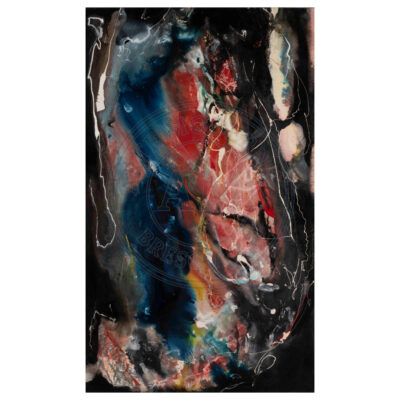
Dark Hemisphere
Technique
Oil on canvas
Dimensions
inch 63,77 x 38,19
Year
1957
Origin
- Galerie Stadler, Paris (FR);
- Private collection, Lugano (CH);
- Carlo Monzino private collection (IT);
- Private collection, Lodi (IT);
- A.M. Arte Moderna, Brescia (IT).
The work Dark Hemisphere (1957) represents one of the most intense and mature moments of Paul Jenkins’ pictorial research, fully fitting into the artistic climate of the second half of the 1950s, when international art was experiencing a phase of extraordinary linguistic and conceptual experimentation, in this period Jenkins moved within the orbit of Informal art and Abstract Expressionism, while maintaining an autonomous voice, more lyrical and meditative compared to the explosive gesturality of many of his contemporaries, 1957 in fact marks a crucial transition: the artist had by then developed a personal method based on controlling the flow of color and constructing the image through almost organic processes, where the pictorial matter seems to generate spontaneously on the surface.
From a technical point of view, Dark Hemisphere shows the full mastery of the practice that made Jenkins famous: the controlled pouring and diffusion of liquid color on the canvas, the combined use of oil and enamels allows the artist to obtain effects of transparency and density simultaneously while the enamels, more fluid and luminous, expand creating veils and stratifications, while the oil builds deeper and more substantial areas, Jenkins often worked by tilting the canvas and letting gravity collaborate with the pictorial gesture, guiding the color with unconventional tools, such as spatulas or even blades, without ever losing overall compositional control, the result is a dynamic surface, where the energy of movement remains visible but not chaotic, transforming into a harmonious visual structure.
Exhibition
– 1959 ARTE NUOVA, Circolo degli artisti, Palazzo Graneri, Turin – from 05 May to 15 June 1959, illustrated black and white page 53.
Information request
Artwork:
Artist: