

@Estate of Paul Jenkins
William Paul Jenkins was born in Kansas City, Missouri, in 1923, on 12 July.
As a young man he met Frank Lloyd Wright but it was his meeting with the painter Thomas Hart Bendon that had an influence on him, to whom he confided that he wanted to dedicate himself to painting. As a teenager he worked in a ceramics factory, where he learned a lot about colour.
The Education and Abstract Expressionism of Paul Jenkins
In 1948, in New York, he studied for four years at the Art Students League with Morris Kantor and Yasuo Kuniyoshi. The principles of abstract expressionism were formed here, thanks to them. During this time, he also met Jackson Pollock, Mark Rothko, Lee Krasner and Barnett Newman. Jenkins also became interested in the esoteric philosophy of Gurjieff.
In 1951 he first used the technique of ‘dripping’, which consists of dripping colour over the canvas lying on the floor. The same year he travelled through Europe, Italy and Spain, moving to Paris in 1953.
He forged strong ties with Restany, Tapié, Dubuffet and Tobey.
First solo exhibitions – Paris, Seattle, New York
In 1954, his first solo exhibition was held in Paris at Studio Paul Facchetti (which had already exhibited Jackson Pollock).
His first solo exhibition in the United States was in 1954 in Seattle, at Zoe Dusanne’s gallery, and his first in New York City was held at the Martha Jackson Gallery in 1956.
Painting as an abstract phenomenon
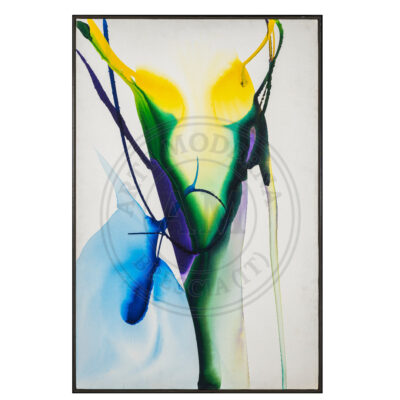
Defined as an abstract expressionist, he sometimes referred to himself as an ‘abstract phenomenon’. In 1959 and 1960, he studied Goethe and Kant and was influenced by Goethe’s theories of colour. Jenkins’ style is characterised by energy, waves of light and thick layers of paint fill the eye with colour, mixing opacity and transparency.
From 1960 he moved away from oil on canvas and started painting with an ivory knife, which was fundamental to his work. The canvas with primer first allows him to control the flow of form and colour and the knife does not scratch the canvas but only guides the paint.
During the 1960s his work was exhibited in Tokyo, London, New York, Paris and Amsterdam.
In 1963 he took over William de Kooning’s loft where he worked until 2000.
In 1964 he was in Tokyo for his exhibition at the Tokyo Gallery and worked with Gutai.
1968 and sculpture
He began in Murano, working on a limited number of glass sculptures with Egidio Costantini. In the 1970s his activity intensified.
In 1971, he sculpted a 2-ton block of French limestone, currently in the Hofstra Museum Sculpture Garden in New York. He realised a sculptural project for a park, Meditation Mandala, which was then cast in bronze.
Paul Jenkins and collages
Collages began to appear in the 1970s. In 1978 there is an exhibition at the Gimpel Weitzenhoffer Gallery in New York that integrates sculptures and collages. In the 1980s, he created collages in honour of the French film director and actor Jean-Louis Barralt.
The return to watercolours
In the 2000s he returned to watercolours while working in France, later exhibited in Lille.
Between 2007 and 2009 he donated 5,000 pieces from his archive to the Archives of American Art.
Today, his works are sought after by collectors and museums, testifying to his lasting influence on the art scene.
He died in Manhattan on 9 June 2012.
Art of Paul Jenkins for sale

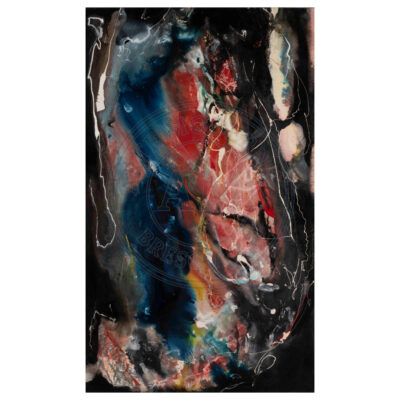

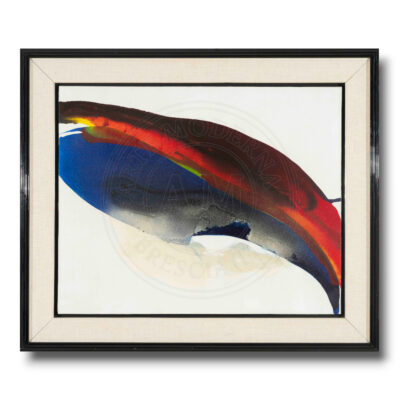
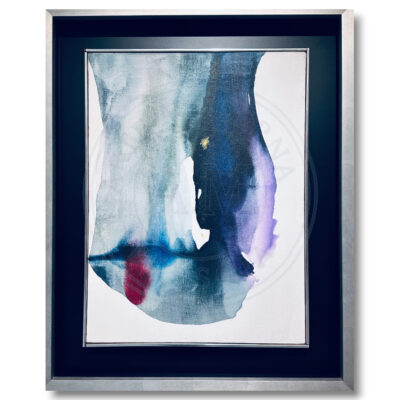
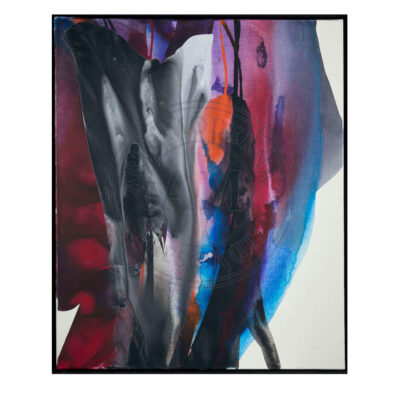
© The Paul and Suzanne Jenkins Foundation
Phenomena Padirac Paris
Paul Jenkins
1963 - Inch 29 x 23,6

© The Paul and Suzanne Jenkins Foundation
Phenomena Bright Bright
Paul Jenkins
1964 - inc. 20.3 x 32

© The Paul and Suzanne Jenkins Foundation
Phenomena Grey Dictates
Paul Jenkins
1965 - inch. 48 x 50.2


© The Paul and Suzanne Jenkins Foundation
Phenomena Fire Find Fire
Paul Jenkins
1967 - inch. 33 x 33

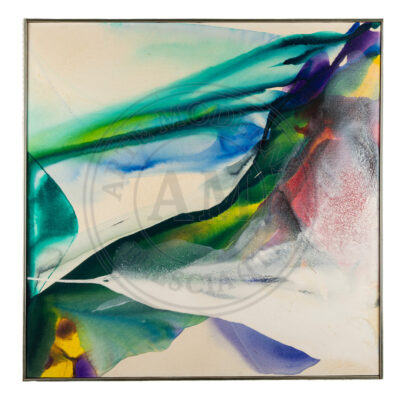
@ The Paul and Suzanne Jenkins Foundation
Phenomena White Emphasis
Paul Jenkins
1967 - inch. 33 x 33
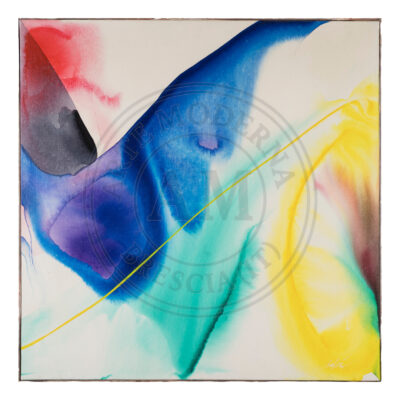
© The Paul and Suzanne Jenkins Foundation
Phenomena Yellow Cast
Paul Jenkins
1967 - inch 32,7 x 32,7

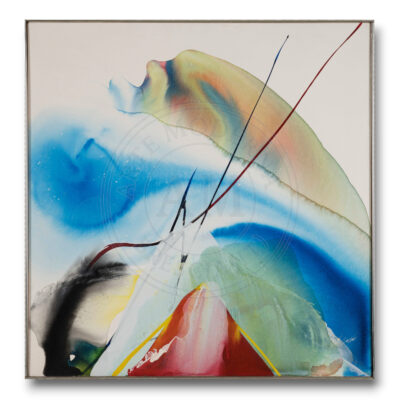
@ The Paul and Suzanne Jenkins Foundation
Phenomena Ever Cross Over
Paul Jenkins
1969 - inch. 34 x 33
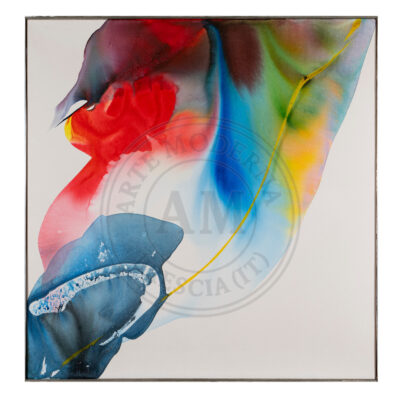
© The Paul and Suzanne Jenkins Foundation
Phenomena White for Oracle
Paul Jenkins
1969 - inch 34 x 33

Biography of Paul Jenkins
Information request
Artwork:
Artist: