
© Fundació Gala - Salvador Dalí
© Fundació Gala - Salvador Dalí
© Fundació Gala - Salvador Dalí
© Fundació Gala - Salvador Dalí
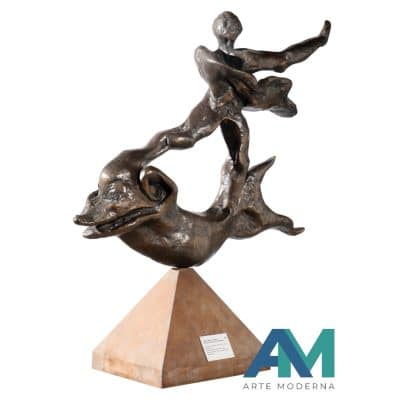
Divinite Chevauchant Un Dauphin
Technique
Bronze Sculpture
Dimensions
inch. 63 x 76 x 17.3
Year
1974
Origin
Collection Dalesart, S.L.;
Jean Javier Bofil, Barcellona;
Private Collection, Verona;
A.M. Arte Moderna, Brescia.
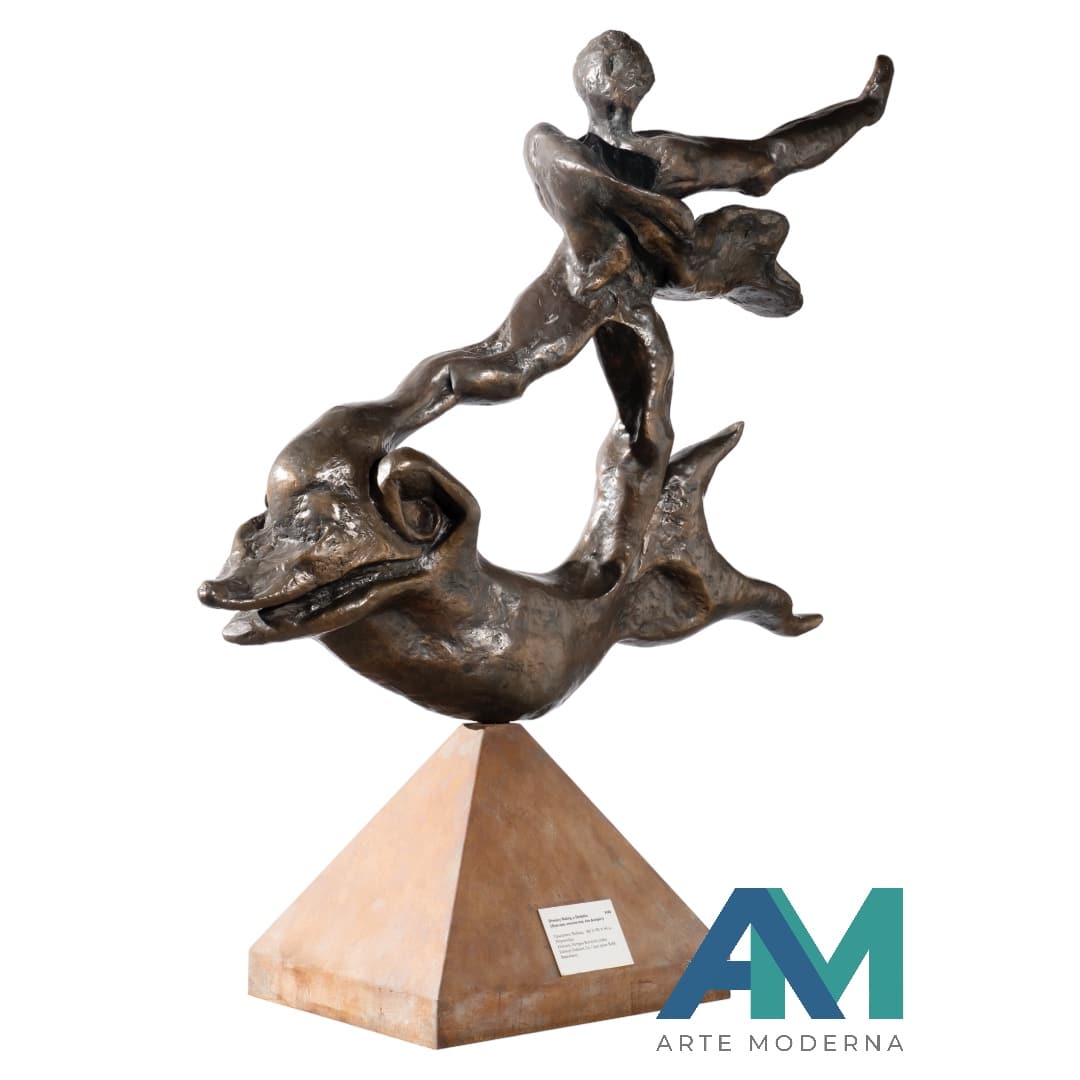
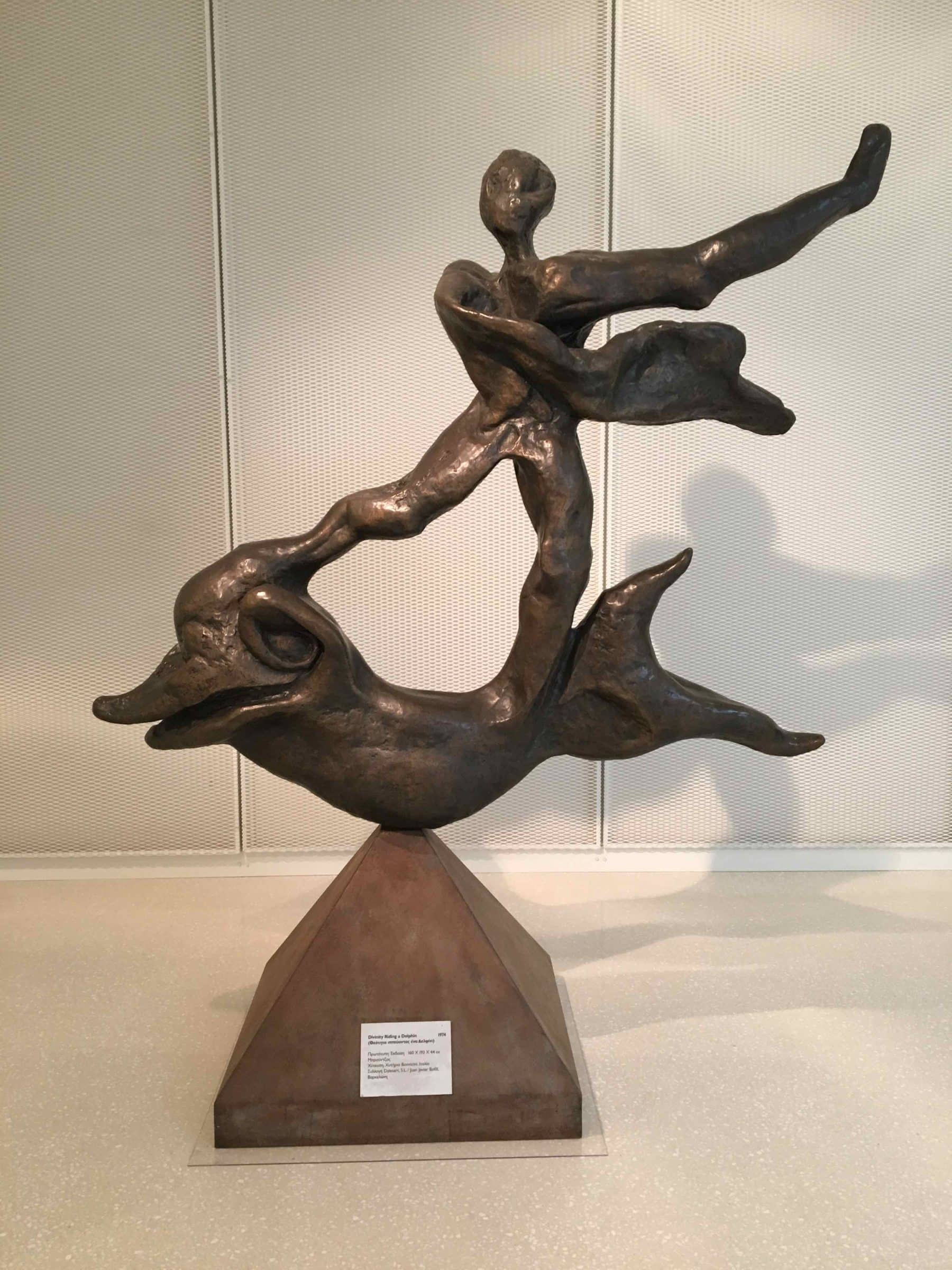
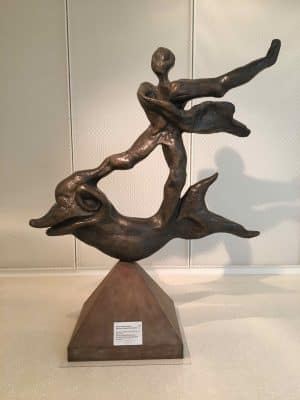
The bronze sculpture “Divinité chevauchant un dauphin” presents itself as a work of extraordinary evocative and dynamic power, capable of condensing into a single form the tension between the earthly world and the mythical dimension, created with vibrant and deliberately irregular surfaces, the composition shows a stylized anthropomorphic figure in the act of riding a dolphin, an animal long associated with the sea, freedom and the passage between different worlds.
This work acquires an even more significant value if placed within the context of the production of Salvador Dalí, one of the greatest and most influential artists of the 20th century; Dalí was not only a painter, but a total creator, capable of ranging between painting, sculpture, cinema, design and literature, his importance in the history of art lies in his ability to transform imagination, dream and the unconscious into concrete and powerful images.
In this sculpture his artistic vision is clearly perceived: a reality that is never simply what it appears to be, but that becomes symbol, metamorphosis, inner revelation, the work testifies to how Dalí was able to bring the surrealist language also into the three-dimensional dimension, keeping its visionary charge intact.
Bronze, a material historically linked to monumental sculpture and classical tradition, is here reinterpreted with a modern expressive approach, the surface appears alive, marked by ripples, folds and reflections that capture the light in an irregular way, this workmanship produces an almost organic effect, as if the material were in continuous transformation, the warm and deep tones of the metal contribute to conveying a sense of antiquity and sacredness, reinforcing the title of the work, which explicitly recalls a divine dimension.
Dalí here demonstrates his ability to unite tradition and innovation, using a classical material to express an extremely modern and personal vision.
The human figure is not represented according to traditional realistic canons, but appears deformed and stylized, the proportions are elongated, the face is barely hinted at, almost devoid of individual identity, this choice transforms the character into a universal symbol rather than into a specific individual, the body seems to merge with the movement of the dolphin, creating a visual continuity between man and animal while the pose suggests a precarious but harmonious balance: the figure seems to guide the marine creature, but at the same time appears supported and carried by it, this dialogue between control and abandonment is typical of Dalí’s poetics, who often explored the boundary between consciousness and the unconscious.
From a symbolic point of view, the scene can be interpreted as a spiritual journey or a metaphor of transcendence, riding a dolphin recalls ancient marine myths, in which these creatures guided human beings towards new lands or saved them from the depths of the sea, the presence of the “divinity” suggests a non-violent dominion over nature, but rather a relationship of harmony and collaboration, man and animal become part of a single movement, a single energy and this vision reflects Dalinian thought, where the visible world is only a door towards deeper dimensions of reality.
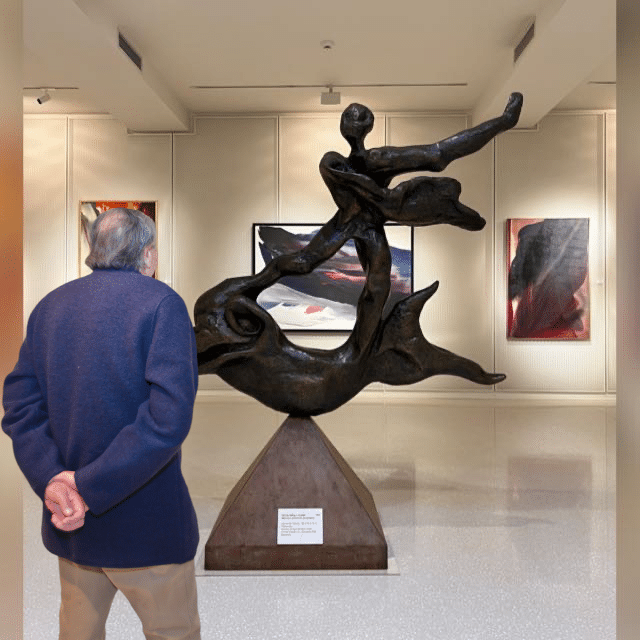
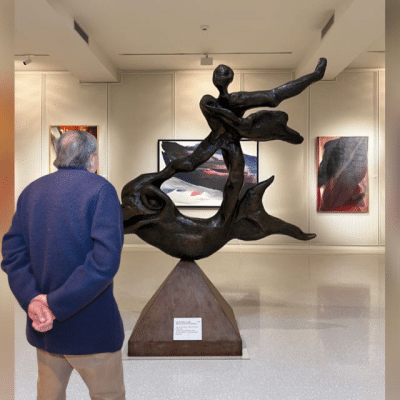
Observed from different angles, the sculpture continuously changes appearance, the lines intertwine, the forms overlap and transform, creating new visual relationships inviting the viewer to move around the work, to explore it slowly, almost as if it were a living organism, Dalí conceived art as a total experience, not only visual but also emotional and intellectual, and this sculpture is an evident demonstration of it.
In conclusion, “Divinité chevauchant un dauphin” represents a synthesis between myth, movement and matter, through the fusion between human figure and marine animal, the work suggests an idea of cosmic balance and of union between physical and spiritual dimension, at the same time, the work testifies to the greatness of Salvador Dalí as a universal artist: a creator capable of overcoming the boundaries of artistic disciplines and of leaving an indelible mark in the history of world art.
A numbered specimen of the same sculpture is installed on the Promenade in Marbella, Avenida del Mar; a second at the Real Círcuito Artístico of Barcelona.
Information:
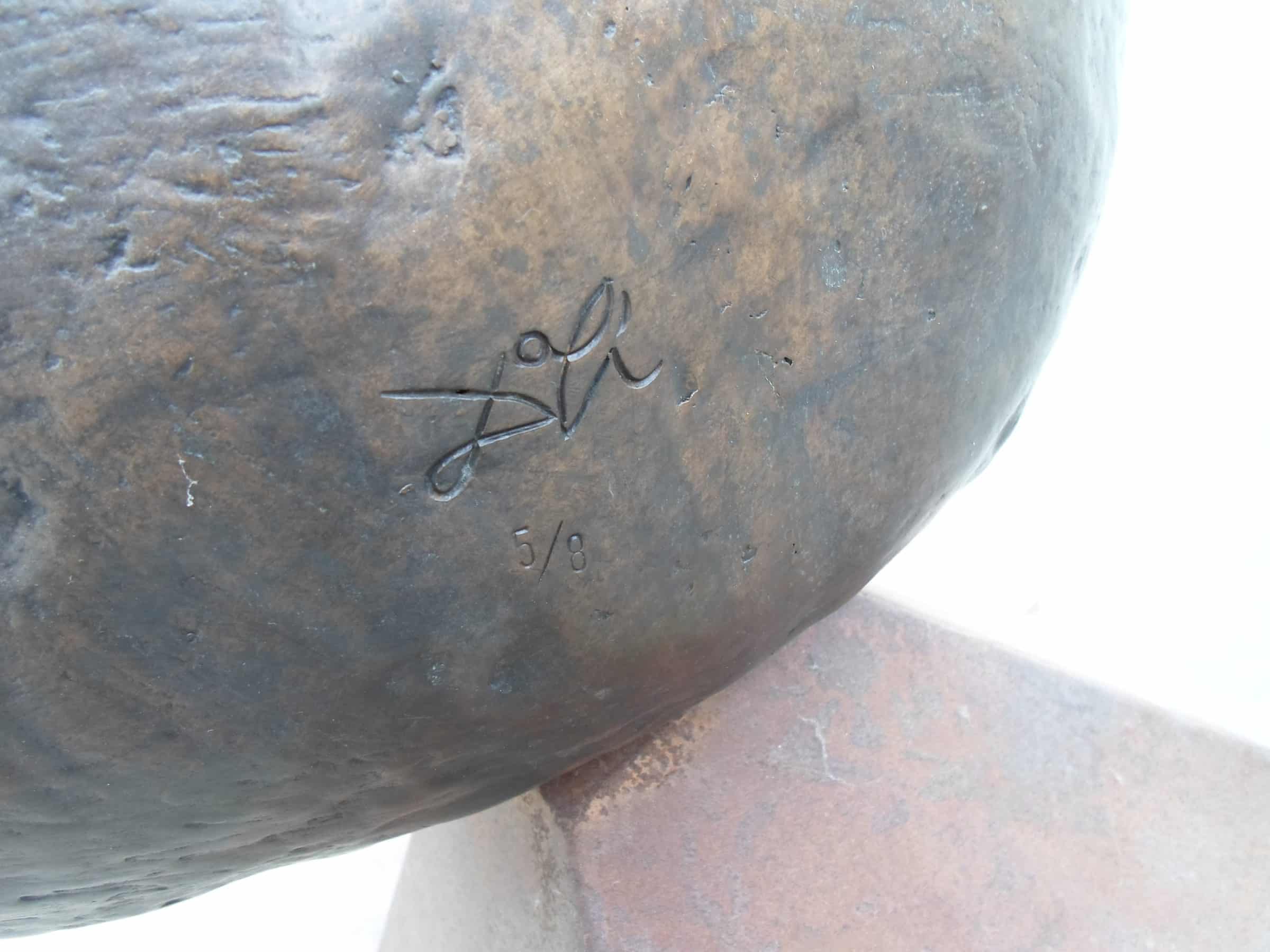
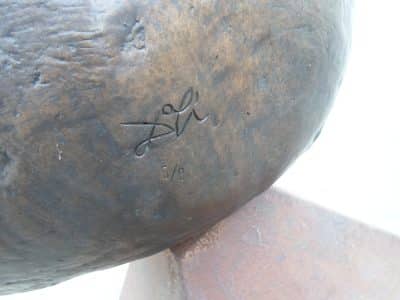
CAST BY BONVICINI FOUNDRY. Authentication by Archives Descharnes. Archive reference O270. Edition 5/8.
Exhibitions:
Arezzo, Palazzo della Provincia, Atrio d’onore – 14 to 20 May 2018
Bibliography:
Dalí – Le dur et le mou, Sortilège er magie des formes, Sculpture & Object – Rober et Nicolas Descharnes, ©ECCART 2003 – pag. 179 tab. 446
Information request
Artwork:
Artist: